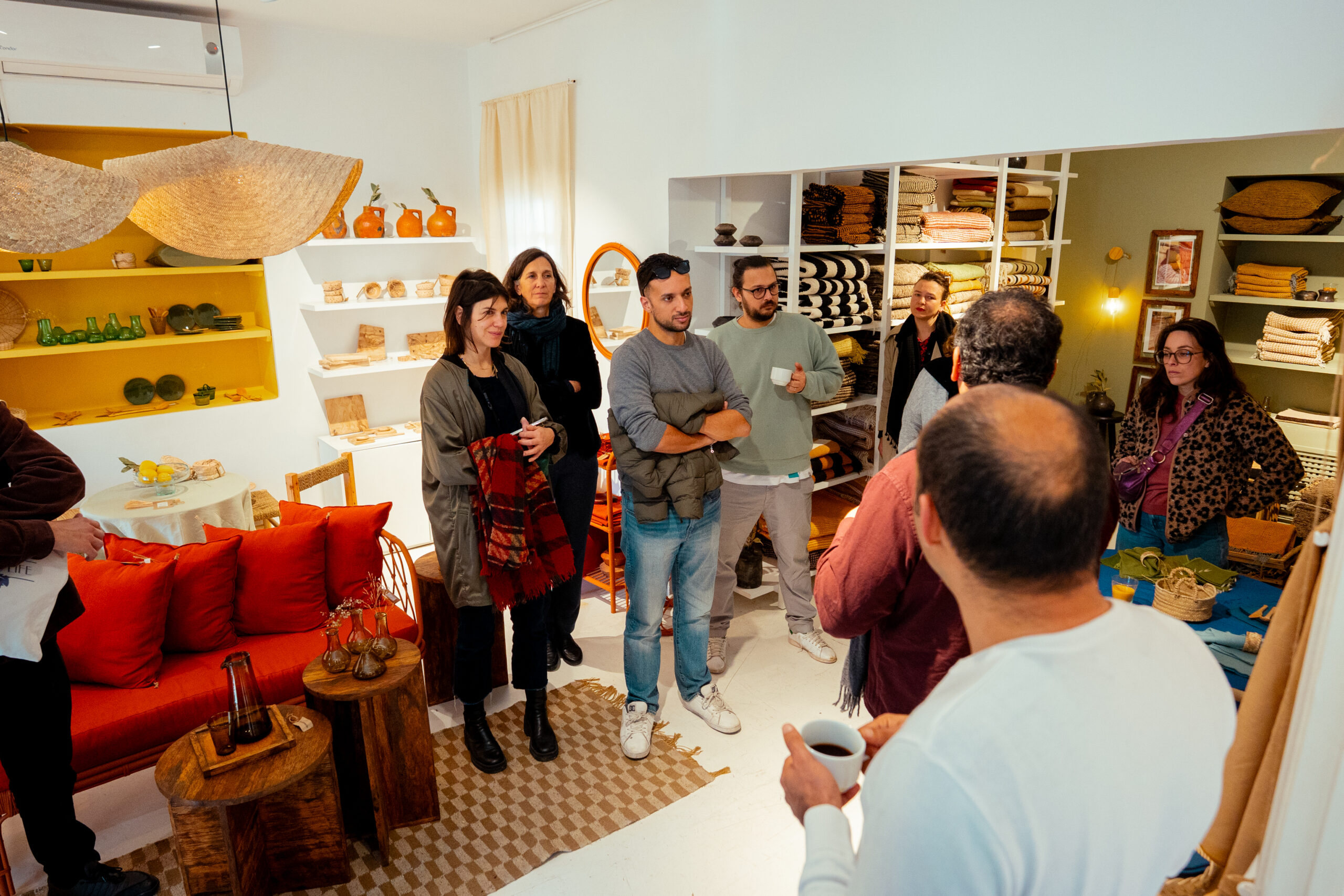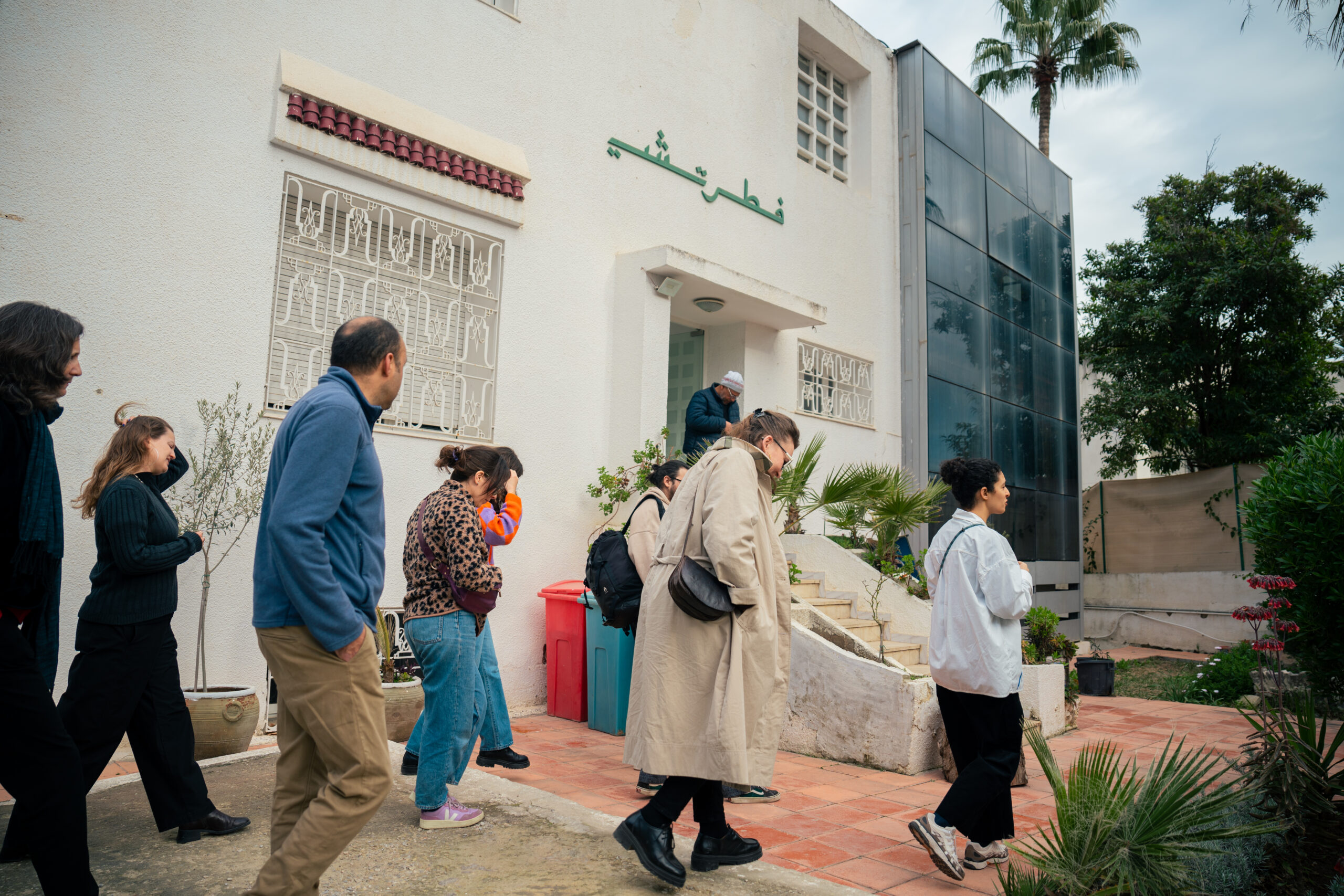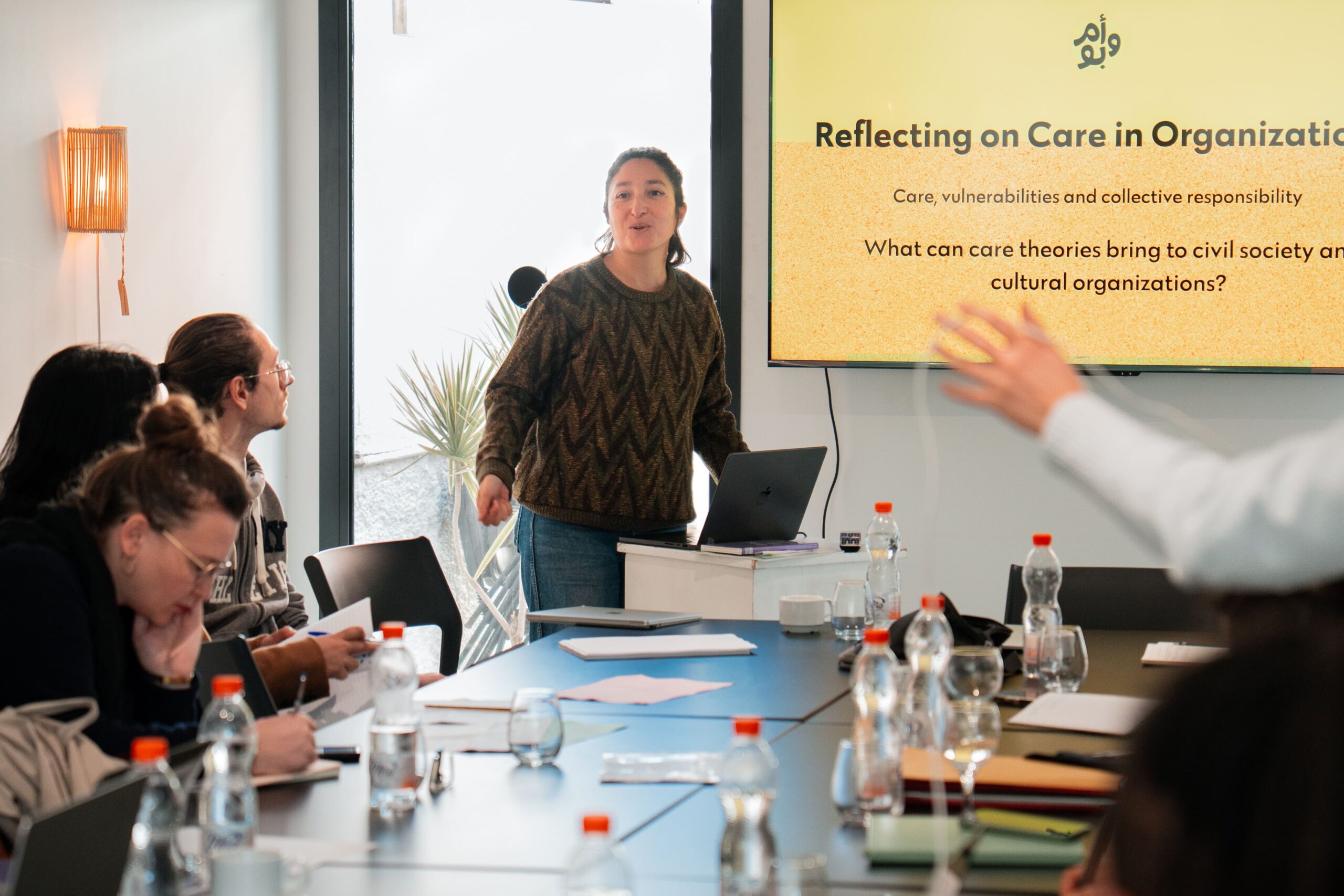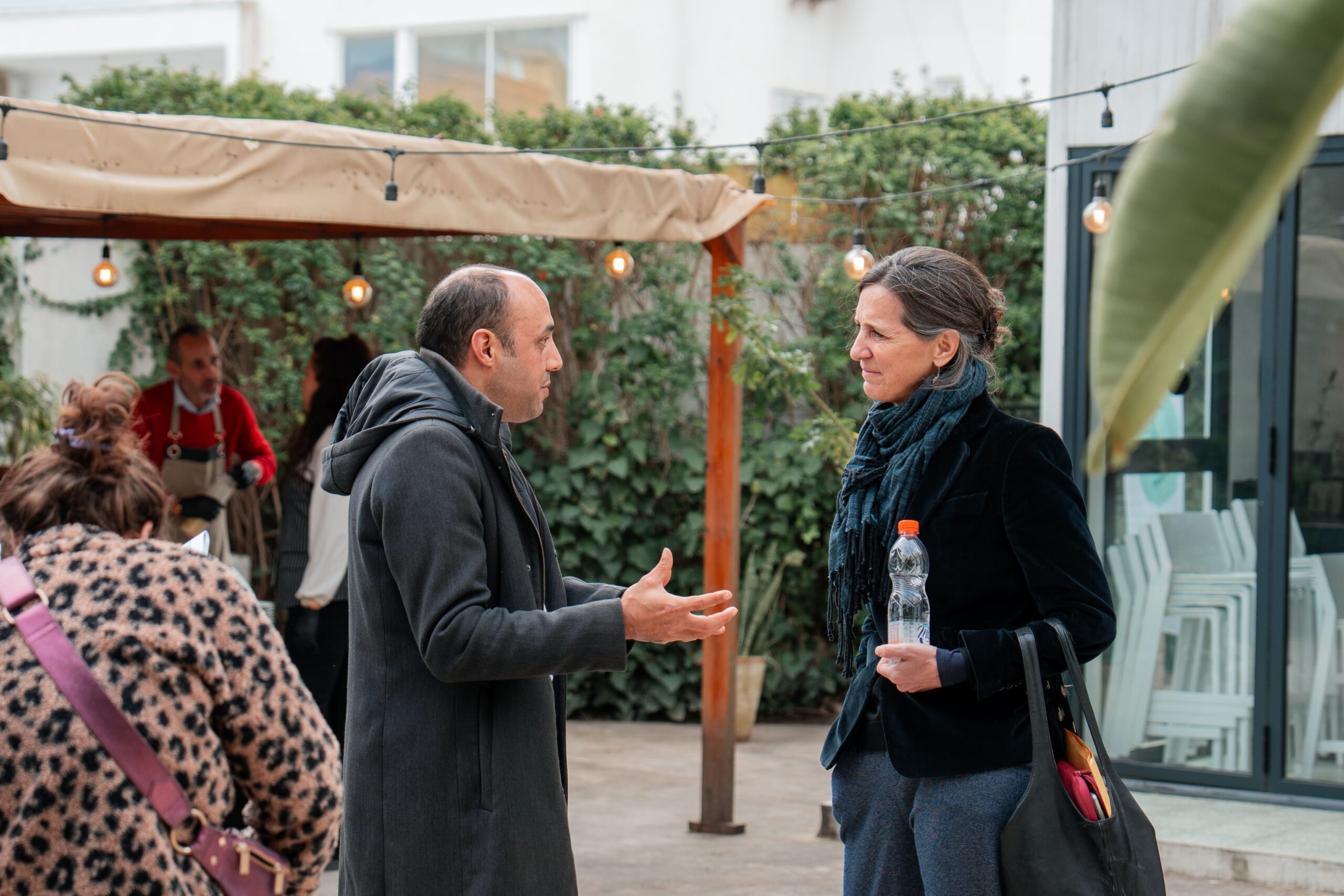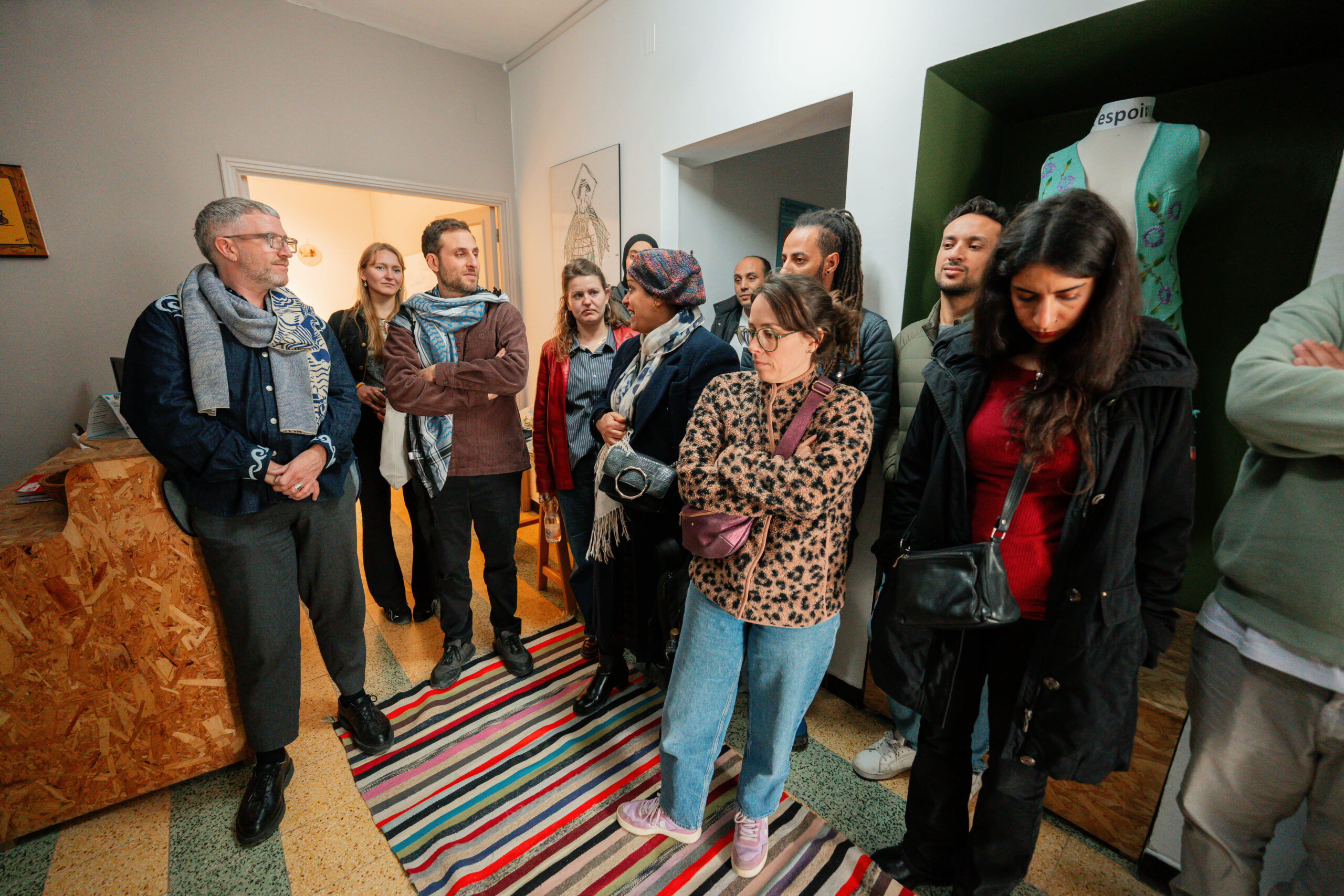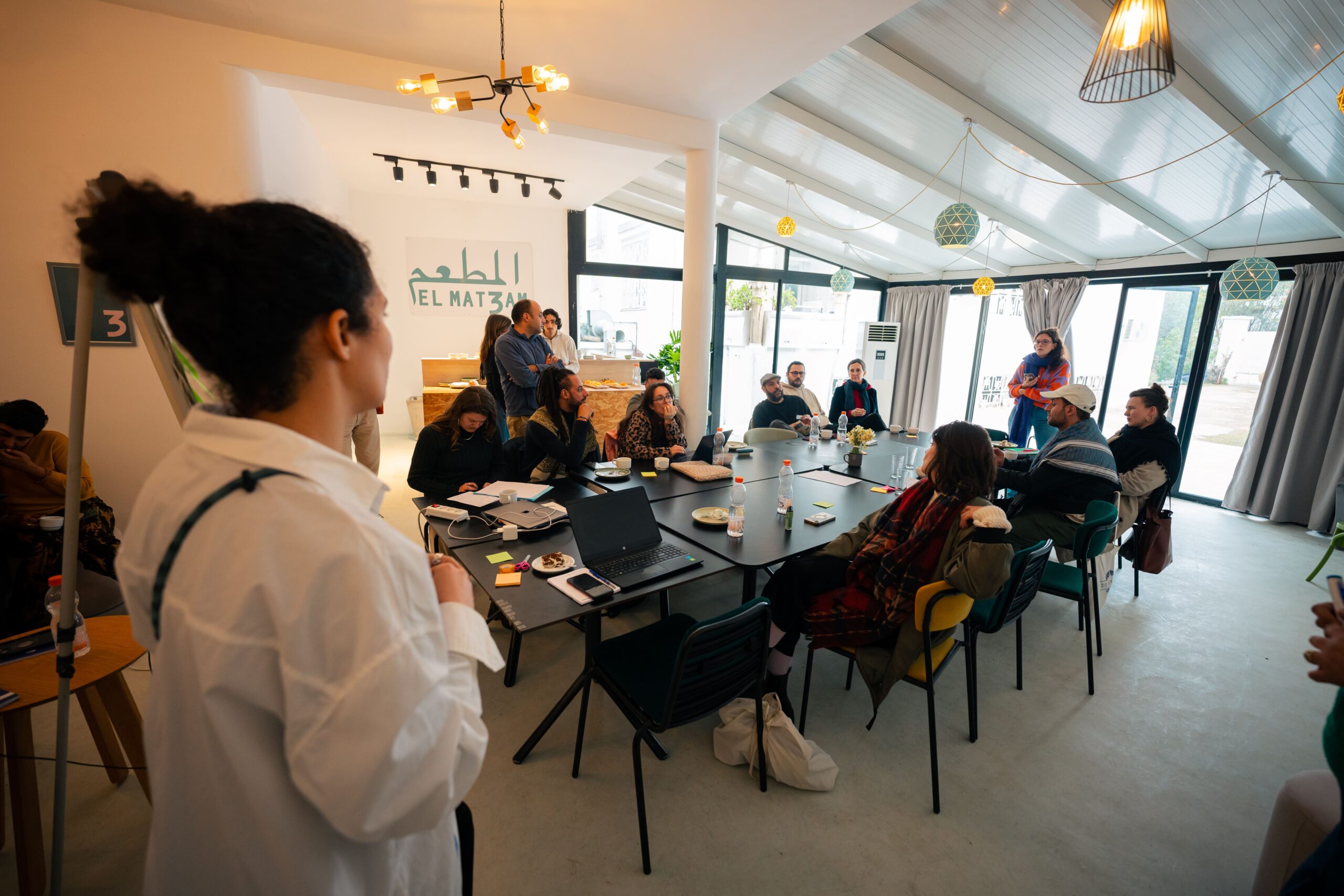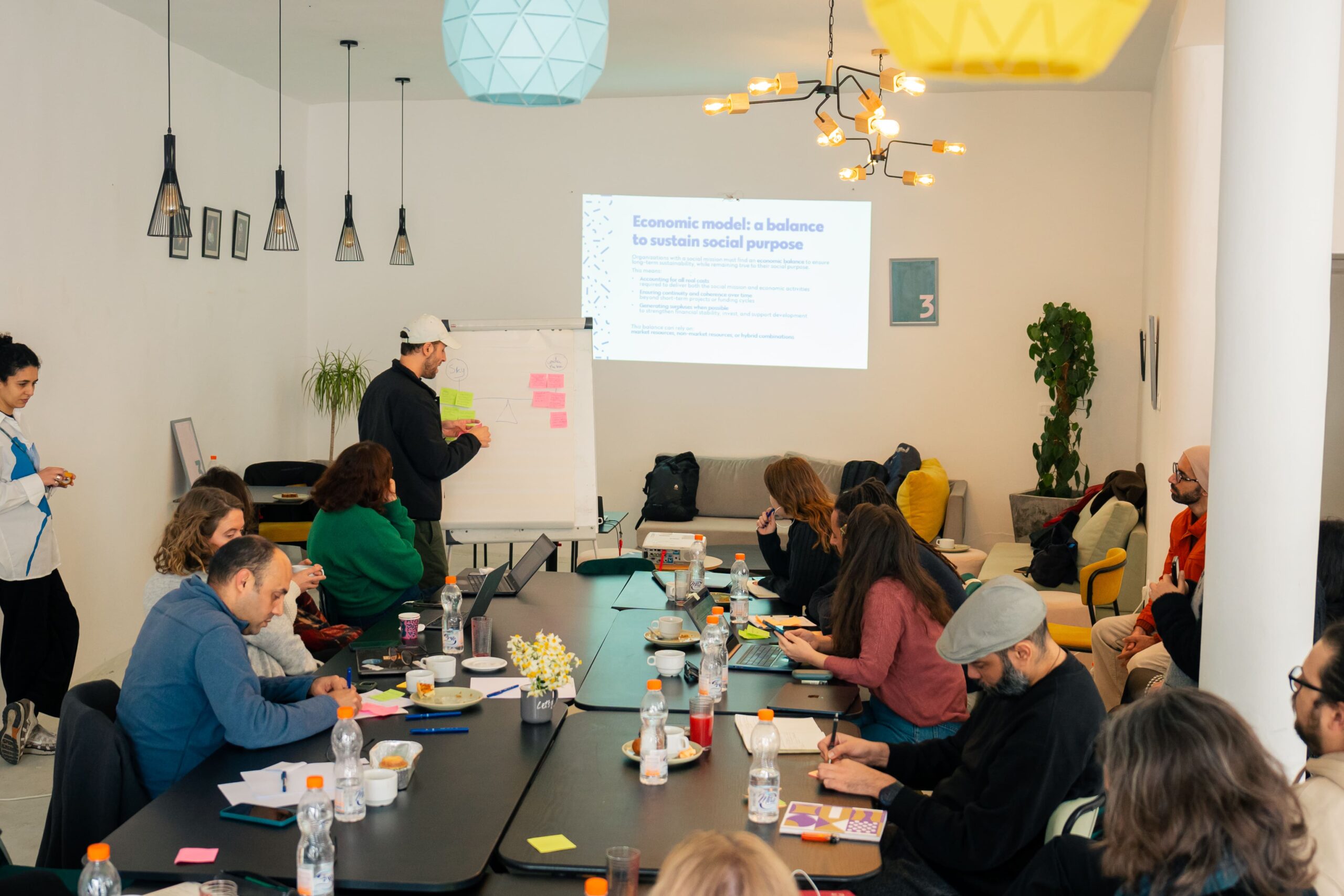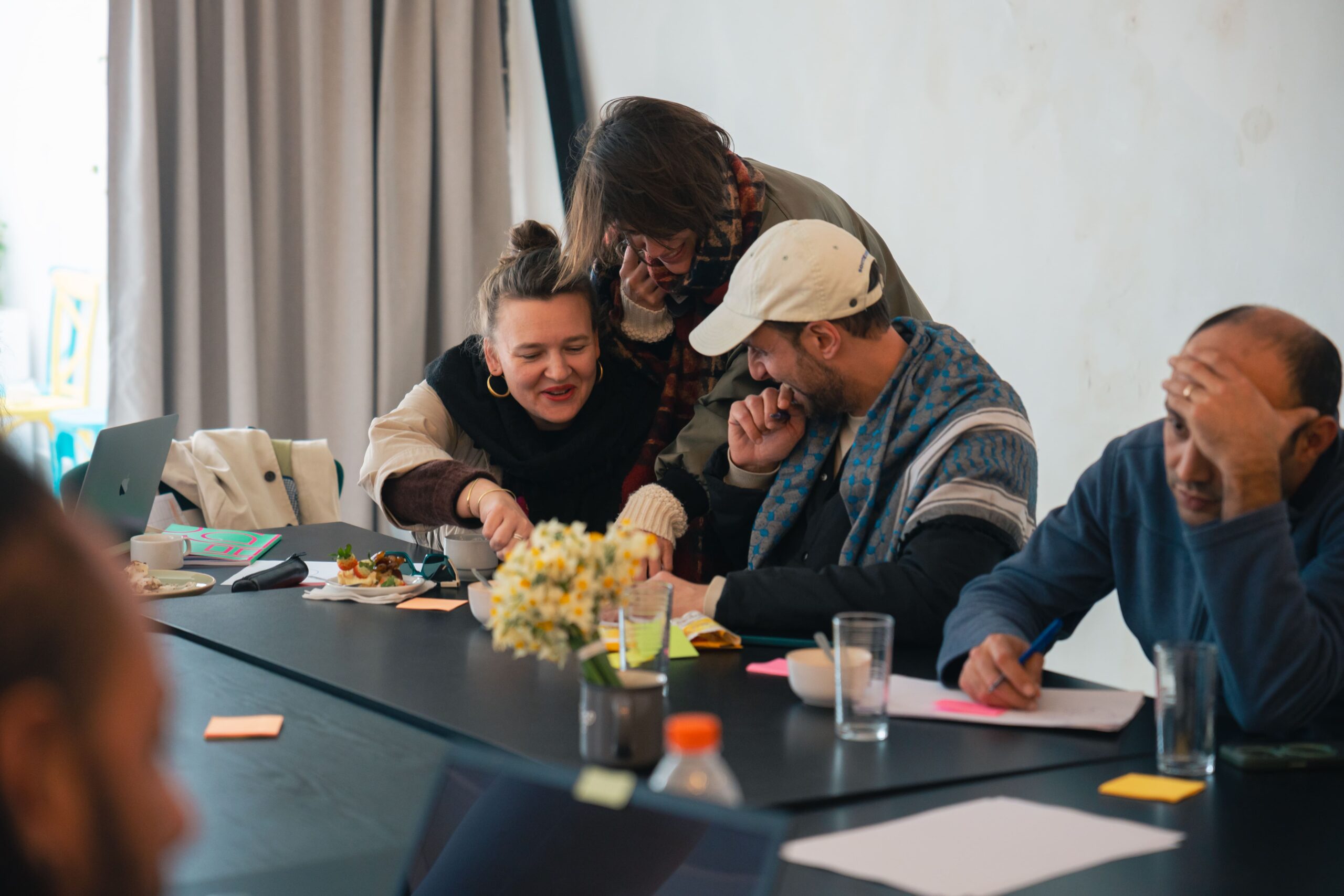
From February 3 to 5, 2026 in Tunis, Mawjaat partners gathered around the theme of care and resilience, hosted by the L’Blaça collective. Over two days, they shared experiences and reflected on their practices, models, and models of organization, in order to better understand how vulnerabilities — affecting audiences, teams, and organizations — run through these spaces and shape the capacity of creative hubs and cultural actors to operate and remain suustainable over time.
Day 1: Care and vulnerabilities, a common starting point for creative hubs & cultural actors
On the first day, care was explored as a professional, political, and collective dimension. Discussions moved beyond an individual understanding of care to explore :
These exchanges opened up a broader reflection on how vulnerabilities are addressed, by whom, at what cost, and with what effects. Drawing on concrete experiences from each organization, participants highlighted a shared reality: much of the work of care remains invisible, undervalued, and often falls on the same individuals or teams, creating the risk of long-term imbalance.
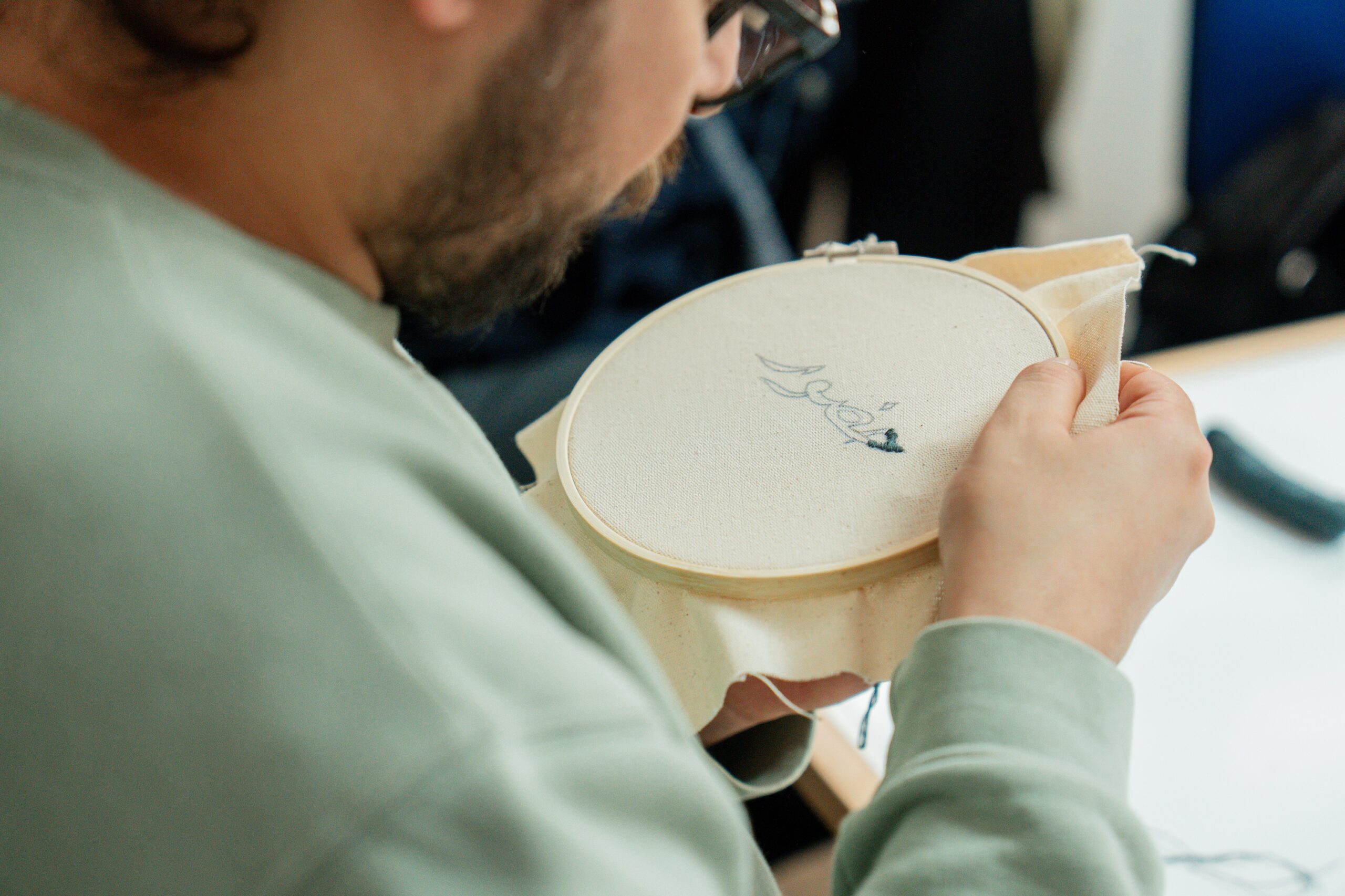
This was followed by a collective mapping exercise of each organization’s “capacity for care,” helping participants identify situations where they absorb too much, where limits are exceeded, and where collective responsibility may be lacking across teams, partners, and funders. The day concluded with an “Embroidery & Care” workshop, offering a more sensitive, practice-based exploration of the idea of “weaving connections” across the Mediterranean.
Day 2: Hybrid economic models and mutualisation — structural responses to vulnerabilities
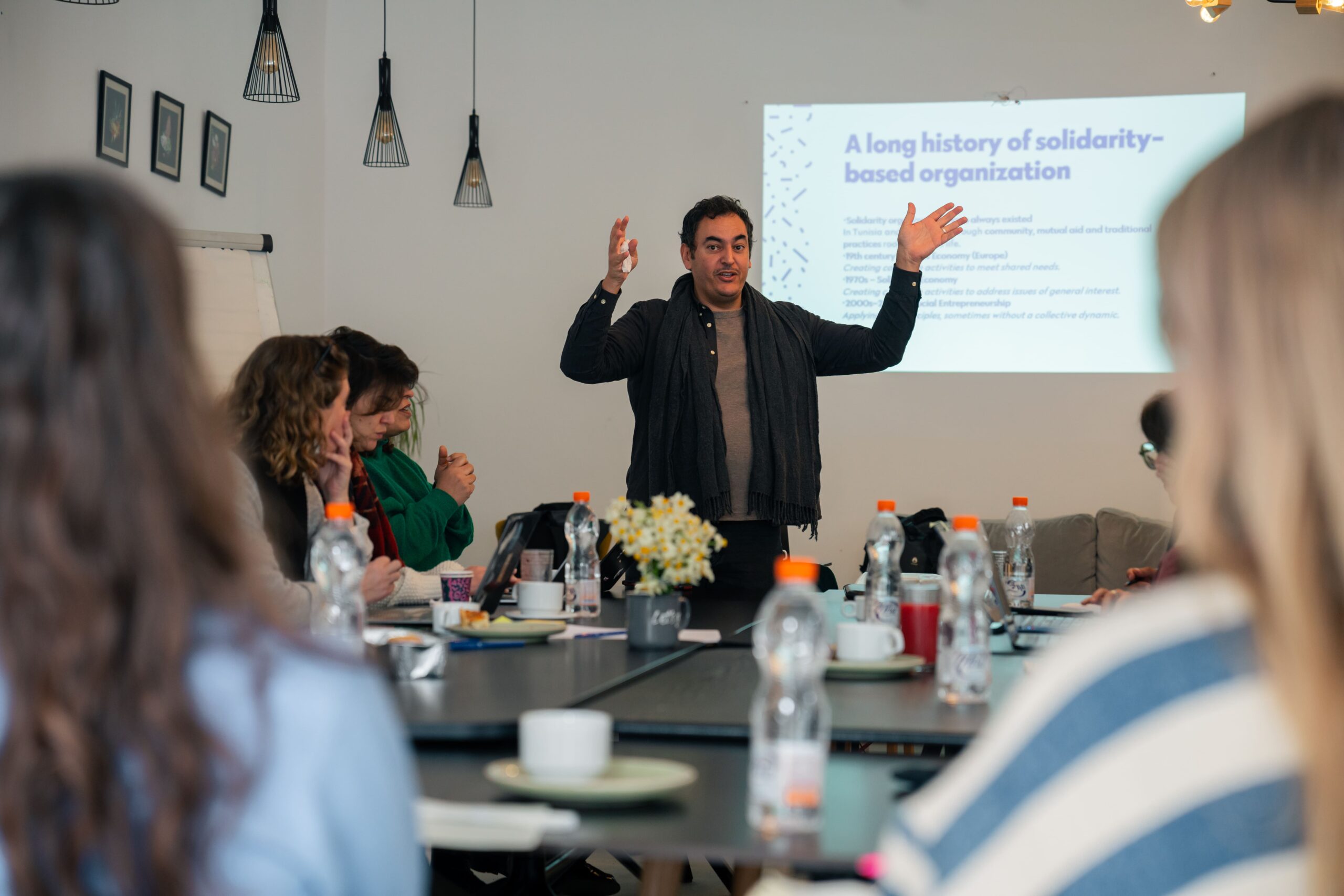
The second day brought economic models back to the core of the political and social project of creative hubs and cultural actors. Rather than being treated as a technical constraint, they were approached as tools that can either support or undermine care and collective resilience. Drawing on frameworks from the social and solidarity economy, participants explored different types of hybrid models (market-based, non-market, and mixed) and their practical implications. Discussions focused on the following key development issues:
Through collective exercises, participants distinguished between the “visible” side of their activities (missions, programming) and the “invisible” side (costs, coordination, workload), often underestimated yet essential to long-term sustainability. A collective cooking workshop using agroecological products brought these reflections into practice, highlighting the importance of local value chains and territorial cooperation.
Between critical reflection and collective experimentation, this first workshop in Tunis highlighted a shared conviction: making vulnerabilities visible and addressing them collectively is key for creative hubs and cultural actors to build more fair and sustainable models, grounded in value-driven economic approaches, shared governance, and strong local anchoring.